
Conversations I had led me to a dive into the ‘gifted child’ literature. Are there ways to raise a child’s IQ? Conversely, are there things parents should avoid because they lower their children’s IQ? I learned some surprising things.
Before we start, ‘gifted’ can mean different things. Having a high IQ. Being gifted in music. Being gifted in creating things out of wood. Or even being gifted at connecting people. These are all examples of how people use the word. This post will only focus on giftedness as it relates to having a high IQ. This definition is relevant, for instance, for gifted support programs such as the Davidson Institute.
What IQ score do you need to be considered gifted?
This depends somewhat on whom you ask.
- An often-used cut-off in research is an IQ measurement of 130 or higher.1
- For Mensa, the cut-off varies slightly depending on the test taken. For instance, Mensa accepts an IQ of 130 on the Stanford Binet 5 or the Wechsler Adult and Children Scales test. But on the Stanford Binet, your child would need a score of 132.2
- Some school gifted programs, however, don’t go by an IQ cut-off value. For instance, in PA “although the District is permitted to use valid IQ tests as part of the screening process, an absolute “cut off” is prohibited”.3
130 (or any other number), by the way, is a totally arbitrary cut-off in real life. Just to give you two examples: Nobel-prize winner William Shockley’s IQ was 129.4 Nobel-prize winner Richard Feynman scored “125 on a school IQ test”.5
Deborah Ruf describes “Five Levels of Gifted” here and outlines some differences between them. She also highlights how out-of-sync with their age group many gifted children can be.
Why does it even matter whether a child is labeled as gifted or not?
A child is a child first and foremost, and time with your child is precious. As a Youth & Education Ambassador for Mensa argues,
“Young gifted children are, at essence, children, and they need the same things all young children need: time spent with parents, books read to them, unstructured play time, a modest array of quality toys (like cardboard boxes), love and time outdoors.“ 6
“Testing should not be done on a whim, for pure curiosity, or to prove a point.Testing should only ever be done to serve the child, and that is rarely necessary at very young ages.” 7
So, be clear on what “you are willing and able to do […] with that information”.8 In many, many situations, it doesn’t matter one bit whether your child is labeled gifted or not, especially if you are homeschooling and do not use public school.
Basically, a gifted label can sometimes help your efforts to advocate for your child, curate their education, and get support. It’s about what fits your specific child.
What percentage of students are gifted?
Based on IQ
IQ tests are not absolute measurements. They are always relative to a group of other people at a similar age. 9
In general, IQ test results are designed to follow a bell curve. “This curve tells us that the average IQ score is 100, and about 95% of the population have an IQ score […] somewhere between 70 and 130. 68% have an IQ level between 85 and 115. Each 15 IQ point interval is called one standard deviation – so we can say that 95% of the population have an IQ between -2 and +2 standard deviations from 100. Mensa requires an IQ of 130 which puts you in the top 2% of the population.”10
Estimates are difficult because IQ is not static
Contrary to popular belief, IQ is not static. As Professor Bryan Roche argues: “No psychological research has ever FOUND that intelligence is fixed for life”. Moreover, IQ tests often measure skills like logical reasoning, which one can improve with training. 11
In addition, IQ tests are only a snapshot at that particular moment. They show how your child scored with that particular test and that particular administrator. How motivated, hungry, tired, concentrated, etc., your child is can all vary and have an effect on the score.
So just because a child got less (or more) than 130 on one test doesn’t mean the next time the result is going to be the same. For instance, in one small study, “77.5% […] of the sample demonstrated an approximate ± 10 point change in their” IQ score “over an approximate six-year period.”12 Another article shows that IQ score correlations for the same people over time are quite a bit below 1. Thus, for instance, it is likely that a substantial number of children who score above a ‘top 3%’ cut-off in one year will not do so again a year or more later.13
Support your child’s IQ development
Before we get to the different strategies, it is important to note that IQ also has a genetic component. Although there is still debate on how large that share is, a substantial share is inherited.14
Thus, not every student can be “made” a gifted child. To take an extreme example: the average IQ of children born with Down Syndrome is “ranging between 30 and 70”44.15 As far as I am aware, no known strategies exist yet to raise IQ by more than 60 points.
That said, there are things that make it more likely and some that make it less likely for your child to be considered gifted in terms of IQ. In the rest of this post, we’re going to discuss three groups of strategies:
- Strategies that focus on raising your child’s IQ.
- Strategies that focus on avoiding lowering your child’s IQ.
- Strategies that focus on improving test performance. Since “gifted” status is often tied to performance on an IQ test, improving test performance can make a big difference in helping your child show how intelligent s/he is.
The first two sets of strategies can benefit your child, no matter whether you’ll ever have him/her tested. However, the last set of strategies is only relevant if you consider having your child go through IQ testing.
Strategies to raise IQ
Breastfeed
Study after study has shown that breastfeeding is associated with higher IQ.16 For instance, in one study from Brazil, at age 30 “participants who were breastfed for 12 months or more had higher IQ scores (difference of 3·76 points) […] than did those who were breastfed for less than 1 month”. 17 Similarly, a study in Poland found that preschoolers who had been breastfed for 3 months had a 2.1-point higher IQ, on average, than bottle-fed children. Those who had been breastfed for 6 months or longer had a 3.8-point higher IQ.18 In a meta-analysis across 17 studies, breastfed participants had a 3.44-point higher IQ, on average. When controlling for the IQ of the mother, the difference was still 2.62 points.19
Provide your child with a secure attachment
In one study, “securely attached children scored 12 points higher […] than did insecurely attached children”.20
Since it would be highly unethical to do a randomized control group study that forces one group to purposefully create an insecure attachment, this is only a correlation. So critics might say that part of the difference can be explained in the other direction. That more intelligent kids are more likely to form secure attachments.21
However, research about parenting styles shows “that responsive parenting—which promotes secure attachments—contributes to higher cognitive abilities“. For instance, in one study, the children of moms “randomly assigned […] to receive training in responsive parenting techniques [showed] greater growth in cognitive skills than did the infants of control moms”.22 Other studies also show that more responsive moms are associated with higher child IQ.23 For instance, a longitudinal study published in 2021 used IQ scores obtained in the teenage years from two countries. It showed that “responsive caregiving” increased IQ by 2.26 points in one country and 0.65 points in another.24
Breastfeeding also contributes to that.25 But there are many other ways to keep your kids close and be responsive to them. To give you just two examples: baby-wearing has been shown by research to contribute to secure attachments.26 Another study found that homeschooled 12- to 17-year-olds had “higher rates of attachment security” than public school students.27
To learn more about attachment parenting, check out, e.g., the work by Dr. Gabor Maté, Dr. Daniel Siegel, and Dr. William Sears.
Cuddle and kiss your child (and give your child some choices)
Research has shown that “lower parental warmth” during the toddler/ pre-school stage is associated with a lower IQ at age 8. The same is true for “higher parental control”. Examples of parental warmth were praising, kissing, and cuddling the child. (There were also negative items such as slapping, smacking, and shouting.) Examples of control were reasoning with the child, giving the child “some choice at meals” and “some choice with clothes”.28
Have your child learn a musical instrument
This is another area where there are quite a few studies. Taking music lessons is good for your child’s IQ. 29 In one study, “each additional month of music lessons was accompanied by an increase in IQ of one-sixth of a point, such that six years of lessons was associated with an increase in IQ of 7.5 points”, while in another, 6 years of playing gave an IQ advantage of 2 points.30
Learning to play an instrument is also good for your child’s fine motor skills.
Train how to solve logic (relational) tasks
Many IQ tests require logical thinking. Training to solve logic (relational) tasks can thus lead to huge gains in IQ scores.31 One training program, called SMART, focuses on “same and opposite and more than/less than”. A meta-analysis of 5 studies showed that it significantly impacts (nonverbal) IQ scores.32 For instance, in one study, the average increase was 8.9 nonverbal IQ points.33
Provide explicit instruction in critical and creative thinking
For instance, one study looked at the effect of prolonged training (3 years) in creative problem-solving on a variety of IQ tests. That led to a 10-15 point better IQ score than the control group. 34
Similarly, research has shown that explicit training in critical thinking – things like “hypothesis testing, basic logic, and the evaluation of complex arguments, inventiveness, decision making, and other topics” - also leads to better IQ scores.35
Play outside, be active, and live somewhere where there’s lots of green space
One study (with a mean age of 10) found that playing more outside and participating in sports “were associated with greater white matter microstructure in children”.36 Other research has found a link between white matter microstructure and IQ.37
Other studies have confirmed a link between being physically active and IQ, although many are correlational (so it’s not clear what came first, the high IQ or the physical activity). For instance, in one study of 12- to 16-year-olds, “children having physical activity more than 5 h/week” “were more likely to have high IQ”. 38
Other studies have looked at exposure to green space. In one, green space where the children lived at age 2 was associated with the children’s IQ at age 6.39
Let your child play with blocks (wooden blocks, LEGO, etc.)
Research has found that playing with blocks is great for the development of math skills. It’s also a way to develop your child’s fine motor skills.
Some research indicates that free play with blocks also has benefits. But including some structured block play into playing with your child is especially good for developing spatial skills and learning things like mentally rotating objects (a common part of IQ tests) as well as math skills.40 Structured block play means that your child is trying “to reproduce a pre-existing design”, for instance by looking at a picture or diagram.41 For instance, in one study, kindergarteners who practiced structured block play increased “their scores on the spatial portion of an IQ test”.42
Provide the brain with varied stimulation for growth
A lot of products have “Intelligence-boosting” claims that are just not true when looking at the evidence.43
However, in general, even in the 80s, studies found that play materials seem to be associated with IQ. For instance, one study followed children from 6 months to 3 years. One of the instruments used was the HOME Inventory. Play materials, how their environment was organized, and how varied their stimulation was when they were 12 months old were among the factors correlated with the kids’ IQ scores at 3. Play materials especially emerged as important predictor variables.44 You can find the shortened HOME assessment here (scroll down to Table 3) and a fuller version here.
The 2021 longitudinal study in the two countries mentioned above also showed that in one country “each additional Z score of learning opportunities” increased IQ by 5.47 points, while in the other the increase was 0.86 points. 45
Provide the brain with healthy fuel for growth
A study found that 8.5-year-old children who had a “‘health-conscious’ (salad, rice, pasta, fish, fruit)” diet had a higher IQ. (1 SD increase in this pattern led to +1.20 IQ points).46
Foster a love of learning and provide an interesting education
There’s a whole big area of literature about gifted students that underachieve dramatically. There can be many reasons for that. Some are:47
- The gifted child is bored in school. S/he starts to really not like school. Often, the child’s behavior becomes not what teachers expect. Some daydream or sleep in class. Others try to engage in other activities during class. Some might lose all interest in school or even become depressed.
- School doesn’t appropriately challenge the gifted child early enough. The child then fails to develop vital study skills, self-discipline, and perseverance, as s/he can just ‘coast’ with minimal effort and still pass.
- Some gifted children might try to underachieve to fit in better with their peers.
- Their teachers don’t get them, do not want to make accommodations, or might even have a negative attitude toward giftedness.
The thing is that in general, research has found that education improves IQ. For instance, one meta-analysis found that there was an increase of “approximately 1 to 5 IQ points for an additional year of education”.48 And pleasure in learning matters, too. For instance, one study found that starting to read for pleasure (about 12 hours/week) between 2 and 9 years old had a positive impact on brain structure and cognition.49
What can you do to have your child engaged in and enjoying learning? Which solutions are available depends on your local situation and your child. A child with an IQ of 130 likely needs different solutions than one with an IQ of 190, although both are considered gifted. For more on different levels of giftedness, read Deborah Ruf’s “Five Levels of Gifted” here.
Strategies to avoid lowering IQ
Avoid brain injury, oxygen deprivation, illnesses that cause brain damage, and verbal (and all other forms of) abuse as much as possible
Well, duh.
Avoid lead and other toxins that are harmful to brain development
I put that in a different heading, simply because I have encountered so many people that seem to take this point very lightly. Unfortunately, toxins surround us. And it isn’t feasible to avoid all of them. But we can at least try to limit them.
Avoiding lead is especially important because it can lead to permanent brain damage and a severe drop in IQ.50 Lead paint can be present in any building constructed before 1978.51 So before booking an Airbnb or renting an apartment in the U.S., ask when it was built and opt for those built after that year.
Avoid sleep deprivation
Avoiding sleep deprivation is also important. One study followed children from 2.5 to 6 years old. Children whose moms said they slept for less than 10 hours a night, on average, when they were 2.5 (even though their nighttime sleep had increased to about 10 hours by 3.5) were 2.4 times more likely to score low on the block design subtest of an IQ test at age 6 than those children who persistently slept 10 or 11 hours a night. The study did not include information about daytime sleep.52 In a study with 10- to 11-year-olds, those who slept less than 8 hours a night had a significantly lower IQ than those who slept more than 8 hours.53
Sleep can have a profound impact on IQ for everyone, not just young children. Dr. Coren, based on a meta-analysis of studies, says that: ““one hour’s lost sleep out of eight results in a drop of one point of IQ and for every additional hour lost, you drop two points. And it accumulates. So if you cheat on sleep by two hours a night over a five day week, you’ve lost 15 points.””54 That’s a HUGE drop.
Avoid stress
Stress often seems to be so much a part of our adult lives. But it’s really harmful to brain development. For instance, a Harvard researcher called Martin Teicher found that stress in early childhood reduced “the volumes of three important areas of” a part of the brain.55 A study in the Netherlands followed participants from still being fetuses to when they were 13 years old. They found that early life stress led to a significantly lower IQ.56 And another study in Brazil and South Africa showed that for “each additional Z score of [the] total cumulative adversity” score, “IQ decreased by 5.89” points.57
Avoid parental factors that lower IQ
It’s not just stress that can impact children’s IQ. A lot of parental factors can do that, too. One example is maternal depression, which research has found to lead to a lower IQ in their child. Researchers explain that if the mother is depressed, she doesn’t “invest emotionally or in providing learning materials to support their child”.58 So if you’re depressed or have any similar issues, get treatment.
Avoid nutrient deficiencies and unhealthy nutrition
The brain needs good fuel to grow well. A meta-analysis has found that “supplementing a deficient child with multivitamins raises their IQ”, as does “supplementing a deficient child with iodine”.59
Moreover, another study found that the more ‘processed’ (“high fat and sugar content”) food children ate at age 3 the lower their IQ at age 8.5. (1 SD in this ‘pattern score’ led to -1.67 IQ points).60
Avoid most screen time at least until your child is more than 5 years old
Screen time is so common nowadays, both in daily life and school. TV, Apps, YouTube videos, emails, games, blog posts, chats, … the list goes on and on.
Study after study shows that screen time is bad for the brain development of young children and their cognitive skills. Evidence for that is strong until at least age 5.61 One study with a mean age of around 10 found no association between screen time and brain white matter microstructure.62 So it seems that a shift from ‘screen time is harmful’ to ‘screen time is okay within limits’ occurs sometime in elementary school.
So can you show your child a photo you just took with your phone so s/he understands why you have that thing close to his or her face? Sure. Can you do a video call with the grandparents? Absolutely. But in general, avoid screen time as much as you can for young children.
Strategies to improve test performance
Practice similar tasks
That practicing IQ tests can influence the results is one of the things that I still recall from a class I took for my initial degree even more than 20 years later. Actually, when you read about IQ, ‘test practice’ is one of the things that make it difficult to evaluate whether interventions are effective. For instance, re-testing with the same test might lead to higher scores simply because of test practice.63
How large that effect is depends on what tasks the IQ test uses. One study looked at a test with matrix items, which are considered one of the easiest types of items to practice because there are rules that one can use to help find the solution. Coaching helped increase the measured IQ score by over 15 points! 64
However, it is important not to stress out your child. Ultimately, it’s a love of learning that’s going to be much more important than a gifted label. You don’t want to turn him/her off of learning or academics!65
Prepare for dealing with test situations
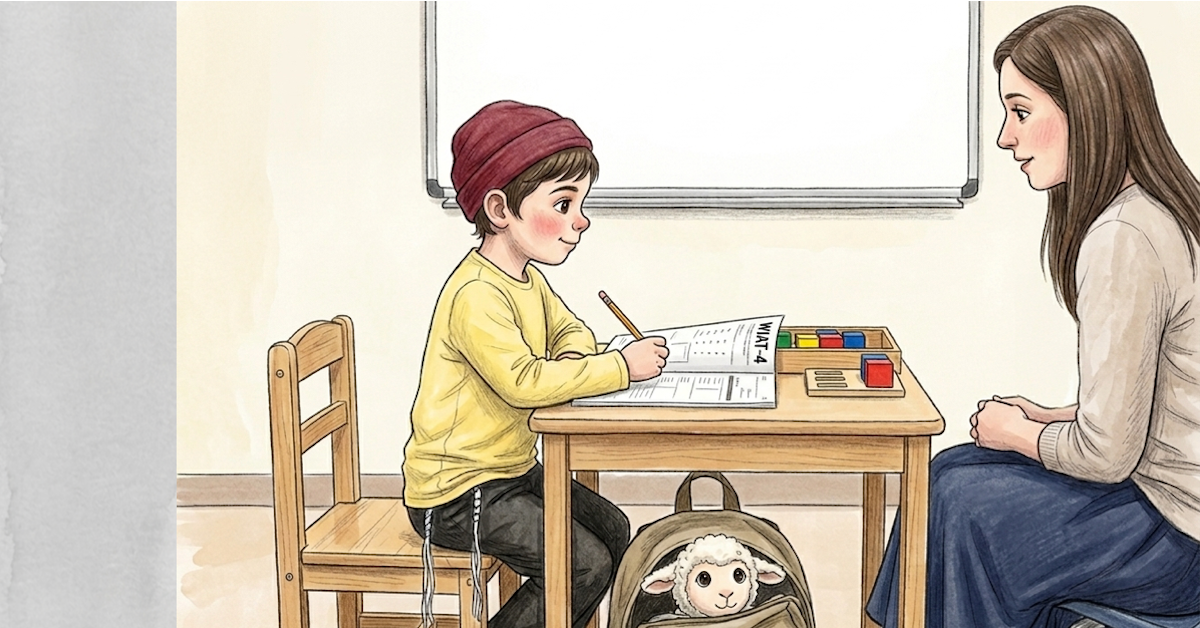
Many children are young when they take an IQ test. Children often take the test before or upon school entry at 4 or 5. Some even take the test as young as 2 1/2.66 That means that many “have never taken a test before in their lives”. Try to give your child as much of a heads up as possible of what is going to happen. Also, help them learn “how to listen to the questions, how to consider answer choices, how to pick an answer”, including in multiple choice type of questions.67 Think through all choices before answering. Don’t just say “I don’t know” but give it your best guess.
At the same time, for some children, it might be good “not to use the word “test” when describing what will happen”. For others, phrasing it as a test can be motivating.68 Another way to phrase it is that s/he is “being tested to” help “understand her more” and “find ways to make learning more interesting”.69 Or, that they will “be meeting with Dr. [______] and will be doing some different activities that will help us make a good decision about school for the following year”.70 It really depends on your child.
You can also “[l]et him know there will be questions he cannot answer since the test is designed for children of all ages. He is not expected to know everything, but you would like him to try his best.”71
Split the test up
Children this young also still have very limited attention spans for sitting still – often shorter than the test duration. For instance, the Stanford-Binet-5 takes at least about 50 minutes (5 minutes per subtest).72 But according to one source, 2-year-olds “should attend to an activity […] for 3-6 minutes” and “3-4 year olds […] for 8-10 minutes”.73 Thus, ask whether the different subtests can be taken with lots of breaks in between, and ideally even somewhat split to be taken on different days.74
Think about how to make dealing with unfamiliar (intimidating) adults easier
IQ tests are usually administered one-on-one for young children. But, an unfamiliar adult questioning the child can be intimidating. Even in non-test-situations, you might have observed that your child can totally do the movements to a song at home, for instance, but doesn’t do them or only partially does them in a group setting, even when you’re there, too.
There’s no one-size-fits-all answer. For instance, for some children, “role playing at home (i.e., simulating the interview and testing) […] are likely to increase the pressure that the child experiences and raise the anxiety level”, making the situation worse instead of being helpful.75 For other children, play-acting the test situation (you can “take turns playing the tester”) can make them “more comfortable in the real situation.” 76
If you have a child who might be shy:
- Try to do the test with a well-trained psychologist who can encourage your child. and “let the tester know early” that your child is shy, so that “hopefully she will be sensitive to your child’s personality.”77
- Find out whether the test administrator allows you to be in the room. The younger the child and the less used s/he is to being away from you, the more important it is to find out about that and to make sure you know the procedure if your child tries to come to you during the test. Many test administrators do not allow the parent to be present, while others allow the parent to be present, but seated behind the child (so that they can’t give subtle clues as to what the answer is, for instance).78
Develop vocabulary and world knowledge
Tests often contain pictures or words. If you don’t recognize a picture or don’t know what a word means, you’ll have a hard time completing those items successfully. For instance, when researchers wanted to use the Bayley Scales for Infant Development in Bangladesh, they found that children didn’t recognize many of the pictures (which were based on a U.S. book for kids). So, they had to adapt the test to feature pictures from a book that was popular in Bangladesh.79
So reading to your child and talking to your child to develop vocabulary and world knowledge is critically important. And by the way, research has shown that reading to your child has a lot of other benefits.
Try to make test day(s)’ conditions conducive to success
Reschedule if your child is not feeling well. Give them a chance to get enough sleep before the test – the day before the test is not the day to have a late outing with family. Have a good breakfast at home, and take snacks, etc., to have them at hand so that hunger doesn’t interfere. Schedule the test for the time of day that your child usually does best.80
References
- Gottfried, A.W., Gottfried, A.E. and Wright Guerin, D. (2006) The Fullerton Longitudinal Study:
A Long-Term Investigation of Intellectual and Motivational Giftedness. Journal for the Education of the Gifted. Vol. 29, No. 4, 2006, pp. 430–450 ↩︎ - Mensa (n.d.) Qualifying Test Scores. https://www.us.mensa.org/join/testscores/qualifying-test-scores/ (last checked February 12, 2024). ↩︎
- Raffaele & Associates LLC. AQs About Your Child’s Right to Gifted Education. https://www.mykidslawyer.com/faqs/faqs-about-your-childs-right-to-gifted-education/ (last checked February 12, 2024). ↩︎
- Clynes, T. (2016). How to raise a genius: lessons from a 45-year study of super-smart children . https://www.nature.com/articles/537152a ↩︎
- https://www.discovermagazine.com/mind/richard-feynmans-intelligence for quote and IQ score, https://www.nobelprize.org/prizes/physics/1965/feynman/biographical/ for Nobel prize ↩︎
- Lisa. 6 Reasons Not to Give IQ Tests to Young Children https://giftedguru.com/6-reasons-not-to-give-iq-tests-to-young-children/ (last checked February 13, 2024) ↩︎
- Lisa. 6 Reasons Not to Give IQ Tests to Young Children https://giftedguru.com/6-reasons-not-to-give-iq-tests-to-young-children/ (last checked February 13, 2024) ↩︎
- Lisa. 6 Reasons Not to Give IQ Tests to Young Children https://giftedguru.com/6-reasons-not-to-give-iq-tests-to-young-children/ (last checked February 13, 2024) ↩︎
- Haier, R.J. (2014). Increased intelligence is a myth (so far). Front. Syst. Neurosci., 12 March 2014, Volume 8 – 2014., https://www.frontiersin.org/articles/10.3389/fnsys.2014.00034/full , Roche, B. (2023). Intelligence is NOT fixed for life. https://raiseyouriq.com/blog/intelligence-is-not-fixed-for-life ↩︎
- Ashton Smith, M. (n.d.) The Bell Curve And Cognitive Elites https://www.iqmindware.com/blog/the-bell-curve-cognitive-elites/ (last checked February 12, 2024). ↩︎
- Roche, B. (2023). Intelligence is NOT fixed for life. https://raiseyouriq.com/blog/intelligence-is-not-fixed-for-life ↩︎
- Spector, H. (2013) Long-term IQ stability using the WISC-IV and WAIS-IV among a sample of special education students https://www.proquest.com/docview/1459425800 (abstract) ↩︎
- Lohman, D.F. & Korb, K.A. (2006). Gifted Today but Not Tomorrow? Longitudinal Changes in Ability
and Achievement During Elementary School. Journal for the Education of the Gifted. Vol. 29, No. 4, 2006, pp. 451–484. https://files.eric.ed.gov/fulltext/EJ746292.pdf ↩︎ - Plomin, R., von Stumm, S. (2018). The new genetics of intelligence. Nat Rev Genet. 2018 Mar; 19(3): 148–159. https://www.ncbi.nlm.nih.gov/pmc/articles/PMC5985927/
Plomin, R., Deary, I.J. (2015). Genetics and intelligence differences: five special findings. Mol Psychiatry. 2015 Feb; 20(1): 98–108. Literature review in Flensborg-Madsen, T., Falgreen Eriksen, H.L. and Lykke Mortensen, E. (2020). Early life predictors of intelligence in young adulthood and middle age PLoS One. 2020; 15(1): e0228144. https://www.ncbi.nlm.nih.gov/pmc/articles/PMC6986721/ ↩︎ - Mégarbané, A. et al. (2013). The intellectual disability of trisomy 21: differences in gene expression in a case series of patients with lower and higher IQ. Eur J Hum Genet. 2013 Nov; 21(11): 1253–1259. https://www.ncbi.nlm.nih.gov/pmc/articles/PMC3798834/ referencing Carr (1991) ↩︎
- e.g., Castro, R.A., Glover, V., Ehlert, U., O’Connor, T.G. (2021). Breastfeeding, prenatal depression and children’s IQ and behaviour: a test of a moderation model. BMC Pregnancy and Childbirth volume 21, Article number: 62 (2021) Abstract. https://bmcpregnancychildbirth.biomedcentral.com/articles/10.1186/s12884-020-03520-8, Isaacs, E., Fischl, B.R., Quinn, B.T., Chong, W.K., Gadian, D.G., Lucas, A. (2011). Impact of breast milk on IQ, brain size and white matter development Pediatr Res. 2010 Apr; 67(4): 357– ↩︎
- Victora, Cesar G., Horta, B.L., Loret de Mola, C., Quevedo, L., Pinheiro, R.T., Gigante, D.P. et al. (2015) Association between breastfeeding and intelligence, educational attainment, and income at 30 years of age: a prospective birth cohort study from Brazil https://www.thelancet.com/journals/langlo/article/PIIS2214-109X(15)70002-1/fulltext ↩︎
- Fields, D.R. (2011) Surety Bond: Breast-Feeding May Increase Children’s IQ https://www.scientificamerican.com/article/surety-bond-breast-feeding/, referencing Jedrychowski et al.(2011) ↩︎
- Horta, B., Loret de Mola, C., Victora, C.G. (2015) Breastfeeding and intelligence: a systematic review and meta-analysis https://onlinelibrary.wiley.com/doi/full/10.1111/apa.13139 (abstract) ↩︎
- Dewar, G. (nd.d.) Intelligence in children: Can we make our kids smarter?, https://parentingscience.com/intelligence/, referencing Crandell & Hobson (1999) ↩︎
- Dewar, G. (n.d.). Intelligence in children: Can we make our kids smarter? https://parentingscience.com/intelligence/#:~:text=For%20instance%2C%20more%20intelligent%20kids,contributes%20to%20higher%20cognitive%20ability. ↩︎
- Dewar, G. (n.d.). Intelligence in children: Can we make our kids smarter? https://parentingscience.com/intelligence/#:~:text=For%20instance%2C%20more%20intelligent%20kids,contributes%20to%20higher%20cognitive%20ability. ↩︎
- Bradley, R. H. and Caldwell, B.M. (1980) The Relation of Home Environment, Cognitive Competence, and IQ among Males and Females https://www.jstor.org/stable/pdf/1129555.pdf?casa_token=g3rcQdPcBHwAAAAA:Qu2bevjOeB0DRErozYBqmCyajLYfriXUSSHinkldtjT2ccaMzE4mCUeFI9yumU1S5WaPjWQeuz28WXhqGkls4XRlTWJSVlbV-VN_NVXbYR6TQ5Wv1zeH ↩︎
- Trude, A.C.B., Richter, L.N., Behrman, J.R., Stein, A.D., Menezes, A.M.B., et al. (2021). Effects of responsive caregiving and learning opportunities during pre-school ages on the association of early adversities and adolescent human capital: an analysis of birth cohorts in two middle-income countries. https://www.thelancet.com/journals/lanchi/article/PIIS2352-4642(20)30309-6/fulltext ↩︎
- Dewar, G. (n.d.). Intelligence in children: Can we make our kids smarter? https://parentingscience.com/intelligence/#:~:text=For%20instance%2C%20more%20intelligent%20kids,contributes%20to%20higher%20cognitive%20ability. ↩︎
- Rankin Williams, L., Turner, P.R. (2020). Infant carrying as a tool to promote secure attachments in young mothers: Comparing intervention and control infants during the still-face paradigm Infant Behav Dev
. 2020 Feb:58:101413. doi: 10.1016/j.infbeh.2019.101413. Epub 2019 Dec 24. (abstract) ↩︎ - King, J. (2023). Relationship Between Parental Attachment and Cyberbullying Relationship Between Parental Attachment and Cyberbullying Within the Homeschooling Community (abstract) https://scholarworks.waldenu.edu/cgi/viewcontent.cgi?article=13417&context=dissertations. ↩︎
- Chong, S.Y. et al. (2016). Parenting Practices at 24 to 47 Months and IQ at Age 8: Effect-Measure Modification by Infant Temperament PLoS One. 2016; 11(3): e0152452. https://www.ncbi.nlm.nih.gov/pmc/articles/PMC4814065/ ↩︎
- Kaviani, H., Mirbaha, H., Pournaseh, M., Sagan, O. (2014) Can music lessons increase the performance of preschool children in IQ tests? Cognitive Processing. https://link.springer.com/article/10.1007/s10339-013-0574-0, Perlmutter, D. (2008). Raise a smarter child by kindergarten. Harmony/Rodale. (ebook).
Protzko, J. (2016). Raising IQ among school-aged children: Five meta-analyses and a review of randomized controlled trials. Developmental Review. http://dx.doi.org/10.1016/j.dr.2017.05.001 ↩︎ - APA (2006) referencing Glenn Schellenberg Music lessons may boost IQ and grades https://www.apa.org/monitor/jun06/iq ↩︎
- Roche, B. (2023). Intelligence is NOT fixed for life. https://raiseyouriq.com/blog/intelligence-is-not-fixed-for-life ↩︎
- May, R., Tyndall, I., et al. (2021). The impact of the SMART program on cognitive and academic skills: A systematic review and meta-analysis. British Journal of Educational Technology. https://eprints_test.chi.ac.uk/id/eprint/6201/1/Brit%20J%20Educational%20Tech%20-%202022%20-%20May%20-%20The%20impact%20of%20the%20SMART%20program%20on%20cognitive%20and%20academic%20skills%20%20A%20systematic.pdf ↩︎
- McLoughlin, S., Tyndall, I., Pereira, & Mulhern, T. (2021). Non-verbal IQ Gains from Relational Operant Training Explain Variance in Educational Attainment: An Active-Controlled Feasibility Study https://link.springer.com/article/10.1007/s41465-020-00187-z (abstract) ↩︎
- Stankov, L. & Lee, J. (2020). We Can Boost IQ: Revisiting Kvashchev’s Experiment. J. Intell. 2020, 8, 41; doi:10.3390/jintelligence8040041 ↩︎
- Dewar, G. (n.d.)Teaching critical thinking: An evidence-based guide. https://parentingscience.com/teaching-critical-thinking/, referencing Herrnstein, et al. 1986 ↩︎
- Rodriguez-Ayllon, M. et al. (2020). Associations of physical activity and screen time with white matter microstructure in children from the general population. NeuroImage. Volume 205, 15 January 2020, 116258 (abstract) https://www.sciencedirect.com/science/article/pii/S1053811919308493?via%3Dihub ↩︎
- e.g., Holleran, L. et al. (2020). The Relationship Between White Matter Microstructure and General Cognitive Ability in Patients With Schizophrenia and Healthy Participants in the ENIGMA Consortium. https://ajp.psychiatryonline.org/doi/10.1176/appi.ajp.2019.19030225#:~:text=Conclusions-,This%20study%20provides%20robust%20evidence%20that%20cognitive%20ability%20is%20associated,is%20associated%20with%20higher%20IQ., Suprano, I. et al. (2020) White matter microarchitecture and structural network integrity correlate with children intelligence quotient https://www.nature.com/articles/s41598-020-76528-x ↩︎
- Makharia, A., Nagarajan, A., Mishra, A., Peddisetty, S., Chahal, D. and Singh, Y. (2016). Effect of environmental factors on intelligence quotient of children Ind Psychiatry J. 2016 Jul-Dec; 25(2): 189–194.https://www.ncbi.nlm.nih.gov/pmc/articles/PMC5479093/ (abstract) ↩︎
- Lee, K.-S.; Choi, Y.-J.; Cho, J.-W.; Moon, S.-J.; Lim, Y.-H.; Kim, J.-I.; Lee, Y.-A.; Shin, C.-H.; Kim, B.-N.;
Hong, Y.-C. Children’s Greenness Exposure and IQ-Associated DNA Methylation: A Prospective Cohort Study. Int. J. Environ. Res. Public Health 2021, 18, 7429. https://doi.org/10.3390/ijerph18147429 ↩︎ - Dewar, G. (n.d.) Structured block play: Can construction toys boost STEM achievement? https://parentingscience.com/lego-bricks-construction-toys-and-stem-skills/
Dewar, G. (n.d.). Why toy blocks rock: The science of construction play https://parentingscience.com/toy-blocks/ ↩︎ - Dewar, G. (n.d.) Structured block play: Can construction toys boost STEM achievement? https://parentingscience.com/lego-bricks-construction-toys-and-stem-skills/ ↩︎
- Dewar, G. (n.d.) Structured block play: Can construction toys boost STEM achievement? https://parentingscience.com/lego-bricks-construction-toys-and-stem-skills/ referencing Casey et al. 2008 ↩︎
- Dewar, G. (n.d.). Intelligence in children: Can we make our kids smarter? https://parentingscience.com/intelligence/#:~:text=For%20instance%2C%20more%20intelligent%20kids,contributes%20to%20higher%20cognitive%20ability ↩︎
- Bradley, R. H. and Caldwell, B.M. (1980) The Relation of Home Environment, Cognitive Competence, and IQ among Males and Females https://www.jstor.org/stable/pdf/1129555.pdf?casa_token=g3rcQdPcBHwAAAAA:Qu2bevjOeB0DRErozYBqmCyajLYfriXUSSHinkldtjT2ccaMzE4mCUeFI9yumU1S5WaPjWQeuz28WXhqGkls4XRlTWJSVlbV-VN_NVXbYR6TQ5Wv1zeH ↩︎
- Trude, A.C.B., Richter, L.N., Behrman, J.R., Stein, A.D., Menezes, A.M.B., et al. (2021). Effects of responsive caregiving and learning opportunities during pre-school ages on the association of early adversities and adolescent human capital: an analysis of birth cohorts in two middle-income countries. https://www.thelancet.com/journals/lanchi/article/PIIS2352-4642(20)30309-6/fulltext ↩︎
- Northstone, K., Joinson, C., Emmett, P., Ness, A., Paus, T. (2012). Are dietary patterns in childhood associated with IQ at 8 years of age? A population-based cohort study. J Epidemiol Community Health 2012;66:624e628. https://citeseerx.ist.psu.edu/document?repid=rep1&type=pdf&doi=3e8e9f6465147921673f651a7b8dcda03424764f ↩︎
- Davidson Academy (2021). Underachievement in Gifted Students https://www.davidsonacademy.unr.edu/blog/underachievement-in-gifted-students/
65 Colleen THE CHALLENGE OF BEING GIFTED IN SCHOOLS TODAY https://raisinglifelonglearners.com/it-stinks-to-be-gifted/ ↩︎ - Ritchiue, S.J. & Tucker-Drob, E.M. (2018) How Much Does Education Improve Intelligence? A Meta-Analysis Psychol Sci
. 2018 Aug;29(8):1358-1369. doi: 10.1177/0956797618774253(abstract) https://pubmed.ncbi.nlm.nih.gov/29911926/#:~:text=Across%20142%20effect%20sizes%20from,an%20additional%20year%20of%20education. ↩︎ - Lucas, F. (2023) Children who read for pleasure early in life do better on IQ tests, researchers find https://thesector.com.au/2023/07/05/children-who-read-for-pleasure-early-in-life-do-better-on-iq-tests-researchers-find/#:~:text=Children%20who%20read%20for%20pleasure%20early%20in%20life%20perform%20better,University%20in%20China%20has%20found. ↩︎
- e.g. Heidari, S., Mostafaei, S., Razazian, N., Rajati, M., Saeedi, A., Rajati, F. (2022). The effect of lead exposure on IQ test scores in children under 12 years: a systematic review and meta-analysis of case-control studies. Systematic Reviews volume 11, Article number: 106 (2022) (Abstract) https://systematicreviewsjournal.biomedcentral.com/articles/10.1186/s13643-022-01963-y, WHO (2023). Lead poisoning. https://www.who.int/news-room/fact-sheets/detail/lead-poisoning-and-health#:~:text=At%20high%20levels%20of%20exposure,intellectual%20disability%20and%20behavioural%20disorders., MayoClinic Lead poisoning. https://www.mayoclinic.org/diseases-conditions/lead-poisoning/symptoms-causes/syc-20354717 ↩︎
- CDC Lead in Paint https://www.cdc.gov/nceh/lead/prevention/sources/paint.htm#:~:text=Lead%2Dbased%20paints%20were%20banned,lead%20paint%20chips%20and%20dust. ↩︎
- Touchette, E. et al. (2007). Associations Between Sleep Duration Patterns and Behavioral/Cognitive Functioning at School Entry. Sleep. 2007 Sep 1; 30(9): 1213–1219. https://www.ncbi.nlm.nih.gov/pmc/articles/PMC1978413/ ↩︎
- Wang, X.-Y. et al. (2013). Effects of sleep deprivation on the intelligence structure of school-age children in Changsha, China (abstract) https://pubmed.ncbi.nlm.nih.gov/24131840/ ↩︎
- Posen, D.B. (2016). Sleep and Families . https://vanierinstitute.ca/sleep-families/#:~:text=Coren%20states%20that%20“one%20hour%27s,MRIs%20show%20the%20same%20thing. ↩︎
- Jha, A. (2012). Childhood abuse may stunt growth of part of brain involved in emotions. https://www.theguardian.com/science/2012/feb/13/childhood-abuse-growth-brain-emotions ↩︎
- Schuurmans, I.K., Luik, A.I., de Maat, D.A., Hillegers, M.H.J., Ikram, M.A., Cecil, C.A.M. (2022). The association of early life stress with IQ-achievement discrepancy in children: A population-based study https://srcd.onlinelibrary.wiley.com/doi/full/10.1111/cdev.13825 ↩︎
- Trude, A.C.B., Richter, L.N., Behrman, J.R., Stein, A.D., Menezes, A.M.B., et al. (2021). Effects of responsive caregiving and learning opportunities during pre-school ages on the association of early adversities and adolescent human capital: an analysis of birth cohorts in two middle-income countries. https://www.thelancet.com/journals/lanchi/article/PIIS2352-4642(20)30309-6/fulltext ↩︎
- PTI (2018) Depression in mothers can lower child’s IQ
https://economictimes.indiatimes.com/magazines/panache/depression-in-mothers-can-lower-childs-iq/articleshow/63801158.cms?utm_source=contentofinterest&utm_medium=text&utm_campaign=cppst
↩︎ - Protzko, J. (2016). Raising IQ among school-aged children: Five meta-analyses and a review of randomized controlled trials. Developmental Review. http://dx.doi.org/10.1016/j.dr.2017.05.001 ↩︎
- Northstone, K., Joinson, C., Emmett, P., Ness, A., Paus, T. (2012). Are dietary patterns in childhood associated with IQ at 8 years of age? A population-based cohort study. J Epidemiol Community Health 2012;66:624e628. https://citeseerx.ist.psu.edu/document?repid=rep1&type=pdf&doi=3e8e9f6465147921673f651a7b8dcda03424764f ↩︎
- e.g., https://www.cnn.com/2019/11/04/health/screen-time-lower-brain-development-preschoolers-wellness/index.html#:~:text=The%20results%20showed%20that%20children,a%20day%2C”%20Hutton%20said, https://jamanetwork.com/journals/jamapediatrics/fullarticle/2754101, ↩︎
- Rodriguez-Ayllon, M. et al. (2020). Associations of physical activity and screen time with white matter microstructure in children from the general population. NeuroImage. Volume 205, 15 January 2020, 116258 (abstract) https://www.sciencedirect.com/science/article/pii/S1053811919308493?via%3Dihub ↩︎
- Haier, R.J. (2014). Increased intelligence is a myth (so far). Front. Syst. Neurosci., 12 March 2014 Volume 8 – 2014. https://www.frontiersin.org/articles/10.3389/fnsys.2014.00034/full ↩︎
- Becker, N., Krieger, F., Spinath, F. M., & Sparfeldt, J. R. (2020, 2020/09/01/). Teaching the underlying rules of figural matrices in a short video increases test scores. Intelligence, 82, Article 101473. https://doi.org/https://doi.org/10.1016/j.intell.2020.101473 ↩︎
- Tips on Your Approach to Test Prep. https://www.testingmom.com/parents-best-ideas-and-tips-for-preparing-your-child-for-testing/tips-on-your-approach-to-test-prep/ (last checked February 13, 2024) ↩︎
- Lisa. 6 Reasons Not to Give IQ Tests to Young Children https://giftedguru.com/6-reasons-not-to-give-iq-tests-to-young-children/ (last checked February 13, 2024)
18 Ogwude, H. (2023). Kentucky 3-year-old breaks Guinness World Record for youngest Mensa member. https://www.cincinnati.com/story/news/2023/12/04/isla-mcnabb-guinness-world-record-youngest-mensa-member/71799297007/# (last checked February 12, 2024) ↩︎ - (SB-5) Stanford-Binet Intelligence Scales, Fifth Edition. https://www.wpspublish.com/sb-5-stanford-binet-intelligence-scales-fifth-edition (last checked February 13, 2024)
Tips on Your Approach to Test Prep. https://www.testingmom.com/parents-best-ideas-and-tips-for-preparing-your-child-for-testing/tips-on-your-approach-to-test-prep/ (last checked February 13, 2024)
↩︎ - Quinn, K. (2018). What to Expect With Your Child’s First IQ Test – Part One. https://www.testingmom.com/blog/childs-first-iq-test/ (last checked February 13, 2024) ↩︎
- Post, G. (2015). How to explain IQ testing to your gifted child. https://www.davidsongifted.org/gifted-blog/how-to-explain-iq-testing-to-your-gifted-child/ ↩︎
- Silverman, R. Gifted Testing. https://drrachaelsilverman.com/gifted-testing-2/#:~:text=You%20are%20not%20allowed%20to,wait%20in%20the%20waiting%20room. ↩︎
- Post, G. (2015). How to explain IQ testing to your gifted child. https://www.davidsongifted.org/gifted-blog/how-to-explain-iq-testing-to-your-gifted-child/ ↩︎
- (SB-5) Stanford-Binet Intelligence Scales, Fifth Edition. https://www.wpspublish.com/sb-5-stanford-binet-intelligence-scales-fifth-edition (last checked February 13, 2024) ↩︎
- Helping Hands Children’s Therapy Serivces. (2015). How long should my child sit? https://www.helpinghandstherapy.org/news/long-child-sit/ (last checked February 13, 2024) ↩︎
- Lisa. 6 Reasons Not to Give IQ Tests to Young Children https://giftedguru.com/6-reasons-not-to-give-iq-tests-to-young-children/ (last checked February 13, 2024) ↩︎
- TestingMom. What is your advice about warming up a shy child who has to be tested or interviewed for private school? https://www.testingmom.com/dr-blank-questions/what-is-your-advice-about-warming-up-a-shy-child-who-has-to-be-tested-or-interviewed-for-private-school/ (last checked February 13, 2024) ↩︎
- TestingMom. Do they account for a child’s comfort level when testing? For instance, if a child is shy and has to warm up to the testing administrator before opening up. https://www.testingmom.com/karen-questions/do-they-account-for-a-child’s-comfort-level-when-testing-for-instance-if-a-child-is-shy-and-has-to-warm-up-to-the-testing-administrator-before-opening-up/ (last checked February 13, 2024) ↩︎
- TestingMom. Do they account for a child’s comfort level when testing? For instance, if a child is shy and has to warm up to the testing administrator before opening up. https://www.testingmom.com/karen-questions/do-they-account-for-a-child’s-comfort-level-when-testing-for-instance-if-a-child-is-shy-and-has-to-warm-up-to-the-testing-administrator-before-opening-up/ (last checked February 13, 2024) ↩︎
- e.g., https://giftedissues.davidsongifted.org/BB/ubbthreads.php/topics/182712/IQ_test_administration_did_par.html ↩︎
- Parveen, M. et al. (2014). ADAPTATION OF ITEMS OF BAYLEY SCALES OF INFANT
DEVELOPMENT‐II (BSID‐II) SUITABLE FOR BANGLADESHI INFANTS Dhaka Univ. J. Biol. Sci. 23(2): 187‐195, 2014 (July) https://www.researchgate.net/profile/Shaheen-Islam/publication/273267025_Adaptation_of_items_of_bayley_scales_of_infant_development-II_BSID-II_suitable_for_Bangladeshi_infants/links/56659a2208ae15e74634a13e/Adaptation-of-items-of-bayley-scales-of-infant-development-II-BSID-II-suitable-for-Bangladeshi-infants.pdf ↩︎ - Post, G. (2015). How to explain IQ testing to your gifted child. https://www.davidsongifted.org/gifted-blog/how-to-explain-iq-testing-to-your-gifted-child/ ↩︎